Today in our OpenStreetMap (OSM) interview series we are speaking with Omran Najjar about his work as a humanitarian and development technologist, his involvement with the OSM community in Syria, and how open mapping fits into a country undergoing significant change. OpenStreetMap is a collaborative map of the world, built by people across the globe. It reflects a world that is complex, always changing, and shaped by many different local perspectives and lived experiences.
1. Who are you and what do you do? What got you into OpenStreetMap?
I am Omran Najjar. I recently started identifying as a humanitarian and development technologist as I have spent the last 12 years working in humanitarian and development organizations and using my technological skills to achieve those organizations’ goals.
I was working on a project that needed geocoding with Plan International back in 2020 and I needed a background map and this project led me to OSM. That was the start, later I joined the Humanitarian OpenStreetMap Team in 2021 and got more and more involved in mapping and geo technologies.
2. What would you say is the current state of OSM and the OSM community in Syria?
Until December 2024, I avoided the OSM map and community in Syria. I sneaked a look on the map frequently but it was nostalgia as someone who was forced to leave his country. The Turkey/Syria earthquake in 2023 triggered a lot of trauma since my family was in the south of Turkey in the affected region and from daily work life, humanitarian mapping activation started.
After December 2024, the fall of the dictator instilled greater hope for the country’s future, so we started more organized efforts to direct the Syria OSM community activities, as the country has suffered massive destruction and corruption, and the trend seems to have at least stopped deteriorating.
As of 27 May 2026, we had over 200 registered OSM community members and more than 20 active mappers. The map itself had many outdated features and minimum details even in the capital city and other urban areas.
3. What are the unique challenges and pleasures of OpenStreetMap in Syria? What aspects of the projects should the rest of the world be aware of?
I noticed weak internet connectivity and accessibility, or perhaps I’ve grown accustomed to good internet connection as I am living in the EU. When I visited the country it felt lovely to detox from notifications and other messages because many services are blocked. Slack and some Google services are not operational within the country due to technological sanctions from the US and EU. Some of those have been lifted, but the technology has not yet fully recovered.
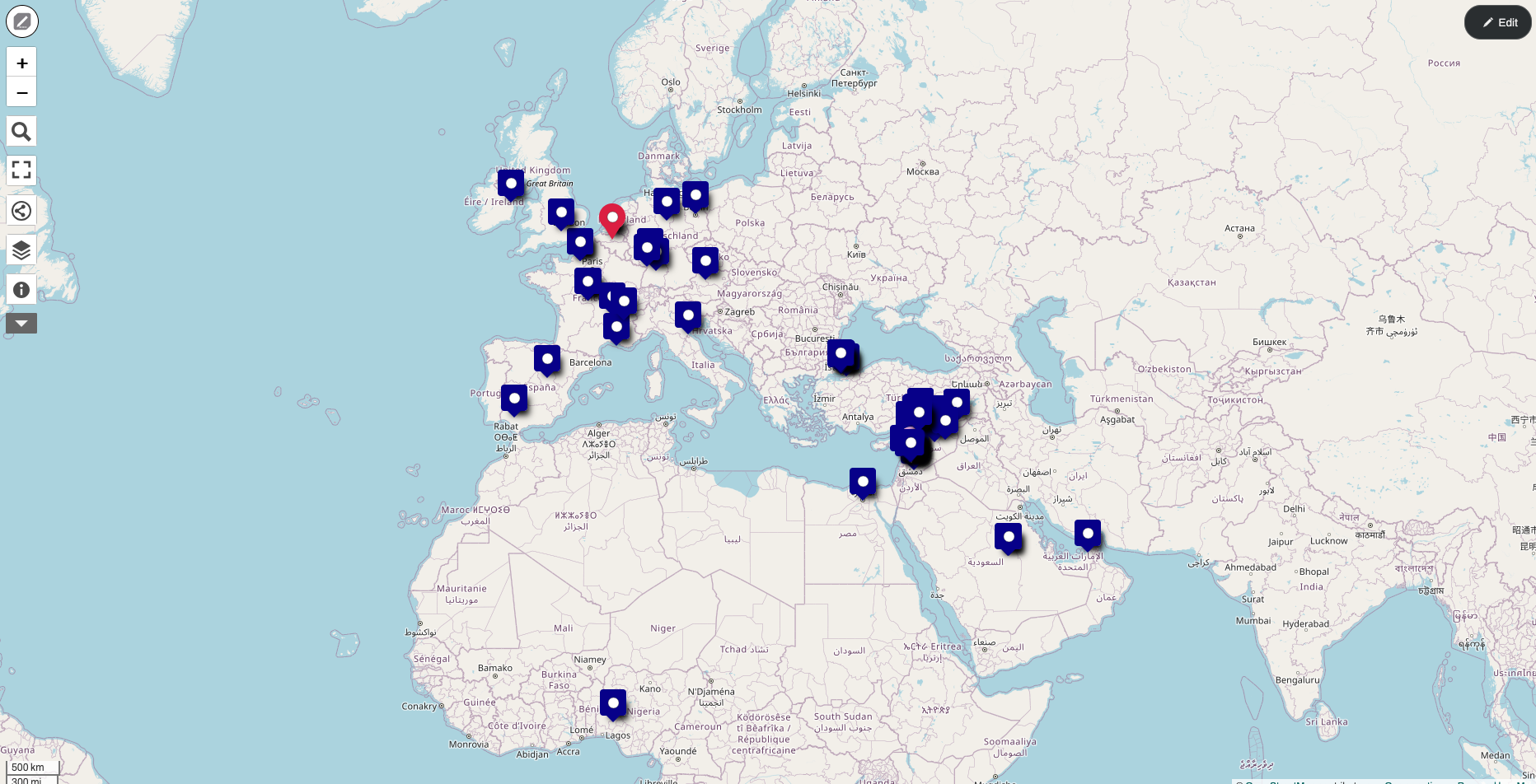
A great pleasure was seeing the collective impressions Syrians had after what we now call Liberation Day on 8 December 2024, and how this has been reflected in the OSM map and community. In the registration form, we asked volunteers to locate themselves on a map and it turned out to be a piece of art.
4. Can you share a specific example where OpenStreetMap data has made a real difference in Syria, such as humanitarian response, navigation, or local decision making, and what is still missing in the map today that would have the biggest impact?
The country closed its doors to the international community for at least 14 years of war and for over 50 years of the same party ruling the country, passed from a father to his son. Therefore, fewer people needed navigation systems, there has always been less coverage for GNSS (Global Navigation Satellite System) as GPS and others. In the last year, increased international visitors and free movement within the country have led to higher interest in navigation systems and more accurate road networks.
My city’s local council (Douma in rural Damascus) has raised the concern about needing a detailed map for the city and have been conducting GIS training and aim to map the city in detail and OSM is a big part of those efforts.
5. What is the best way to get involved? Are there regular meetups, or a place the community chats online?
We have a registration form We are mainly communicating by email, we have a Telegram channel as well and all of those details are always documented in a collective shared document. We are documenting our meetings and other activities. It is mostly in Arabic though.
6. What steps could the global OpenStreetMap community take to help support OSM in Syria?
We have created a couple of mapping projects on HOT Tasking Manager
It turned out the OSM Syria community is not large enough; support from the global community for high-quality data and validation is welcome.
7. OpenStreetMap recently celebrated 20 years. Where do you see the project in another 20 years?
I have sensed some automatic rejection from the OSM community in general against AI, and I do understand that, especially when AI is treated as a black box and feels like it is integrated into everything without careful review (community review). Maybe OSM will become the open source world’s digital twin with community and AI collaboration!
We’d like to thank Omran for generously sharing his time and insights with us. We also want to acknowledge the difficult circumstances he has experienced, including the war in Syria and the devastating earthquake, and the impact these events have had on his family and community.
The views and experiences shared in this interview are those of the interviewee and do not necessarily reflect the views of OpenCage or the wider OpenStreetMap community.
Please let us know if your community would like to be part of our interview series here on our blog. If you are or know of someone we should interview, please get in touch, we’re always looking to promote people doing interesting things with open geo data.